




History
Geological Formation
- Origin: The Imperial Sand Dunes were formed over thousands of years from wind-blown sand originating from the ancient Lake Cahuilla, which once covered parts of the Coachella and Imperial Valleys. As the lake dried up, its sandy shorelines were carried by winds and accumulated to create the dunes.
- Composition: The dunes are primarily composed of quartz sand and stretch for about 40 miles in length and 5 miles in width.
 Indigenous History
- Early Inhabitants: The dunes and surrounding desert were inhabited by Native American tribes, including the Quechan and Cocopah peoples. These tribes navigated the dunes and used the resources of the surrounding desert for food, shelter, and spiritual practices.
- Cultural Significance: The dunes were considered a sacred and challenging landscape. Stories and oral traditions often referenced the dunes as a place of transition or testing.
Exploration and Early Use
- Spanish Exploration: During the 16th and 17th centuries, Spanish explorers traversed the area as they sought routes across the desert. The dunes presented significant challenges due to their harsh conditions.
- Mexican-American Era: After Mexico gained independence from Spain in 1821, the region remained largely untouched by settlers due to its extreme environment. The Treaty of Guadalupe Hidalgo (1848) brought the region into U.S. territory.
Modern Development
- Transportation Route: In the early 20th century, the dunes were a major obstacle for settlers traveling west. Engineers constructed a wooden plank road across the dunes in 1915, allowing vehicles to cross the soft sands. This plank road became a vital route for connecting Yuma, Arizona, to southern California.
- Agriculture and Irrigation: With the development of the All-American Canal and other irrigation systems in the early 1900s, the surrounding Imperial Valley became a major agricultural hub. However, the dunes themselves remained largely undeveloped.
Recreational and Ecological Importance
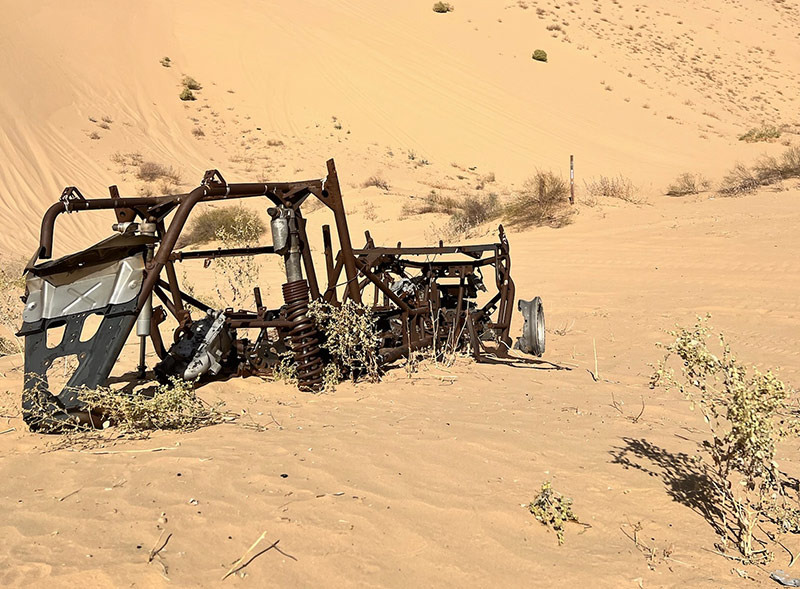
- Recreation: In the mid-20th century, the dunes gained popularity for recreational activities, especially off-highway vehicle (OHV) riding. The dunes are now a premier destination for sand buggies, dirt bikes, and ATVs.
- Designations: In 1972, the Imperial Sand Dunes Recreation Area (ISDRA) was established to manage and protect the dunes while supporting recreational use.
- Conservation: Parts of the dunes were designated as wilderness areas under the 1994 California Desert Protection Act. The North Algodones Dunes Wilderness prohibits motorized vehicles to preserve the fragile ecosystem.
Ecological Importance
- Unique Habitat: The dunes are full of life if you look closely. From tiny lizards zipping across the sand to rare blooms that only pop up after the right rain, it’s all part of what makes this place special. You’ll even find locals like the Algodones Dunes sunflower and the flat-tailed horned lizard, both found nowhere else.
- Threatened Species: One standout is Peirson’s milkvetch which is kind of a desert survivor in disguise. It grows low to the sand with fuzzy, silvery-green leaves that sparkle in the sun. In spring, it shows off clusters of soft purple flowers that look like little pea blossoms. By summer, it dries into long pods that rattle in the breeze. The milkvetch is striking but fragile. Whole patches can disappear when too many riders veer off trail. Which is why it’s now a protected species.
- Conservation Efforts: Balancing recreation and conservation has been a significant challenge. Various stakeholders, including environmental groups, government agencies, and OHV enthusiasts, work to manage the area sustainably.
Contemporary Issues
- Land Management: The dunes are managed by the Bureau of Land Management (BLM), which oversees policies balancing recreational use with environmental protection.
- Legal Disputes: There have been legal battles over the extent of OHV access versus conservation, especially concerning sensitive species and habitats. Please visit our get involved page to learn more about the people who are fighting to keep our OHV lands accessible for us to enjoy.
- Tourism and Economy: The dunes attract hundreds of thousands of visitors annually, significantly contributing to the local economy.
Conclusion
Today, the Imperial Sand Dunes are renowned as a major destination for off-highway vehicle (OHV) recreation, drawing thousands of visitors each year. The vast open spaces and towering dunes make them a premier location for dune buggies, dirt bikes, and sand rails. Alongside motorized recreation, activities like camping, photography, and stargazing attract visitors. However, this popularity brings challenges, requiring careful management to balance human enjoyment with ecosystem preservation.